
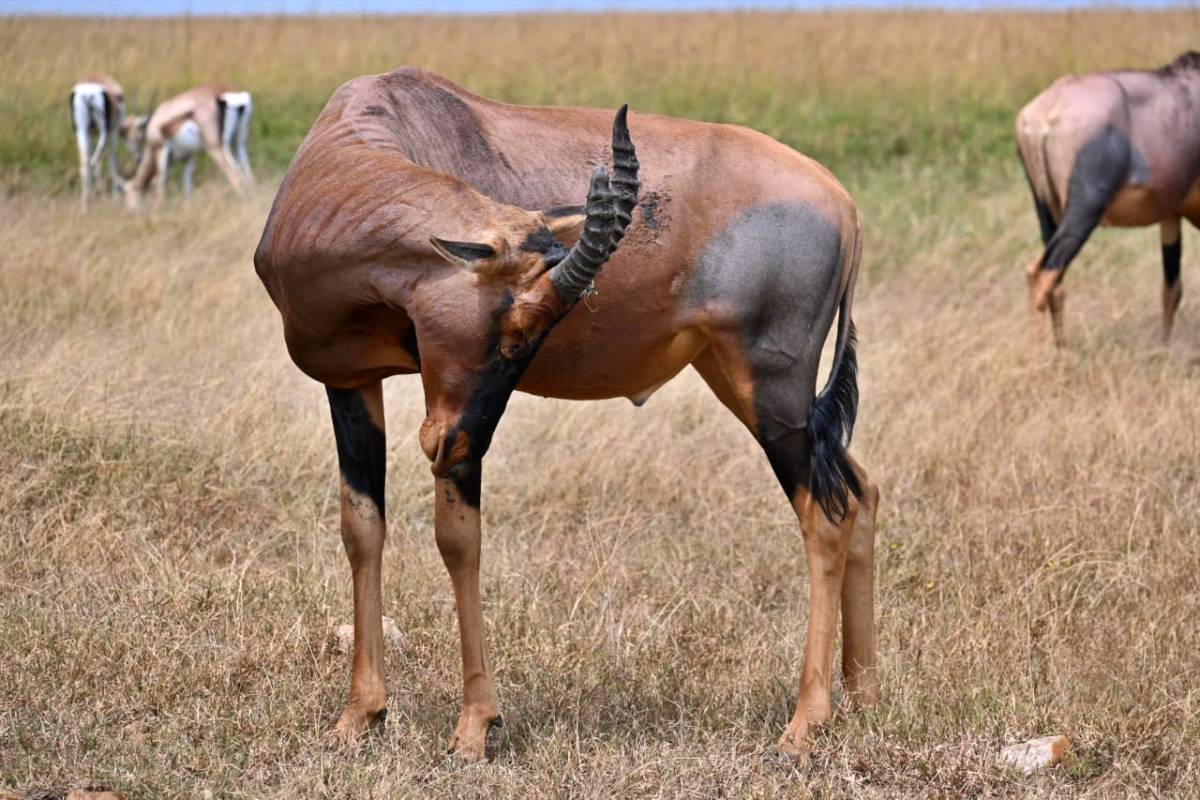
Imagine you’re on a safari, the golden savannah stretching endlessly before you, when suddenly, a sleek figure darts across the landscape. With its glossy coat gleaming in the sun, the topi—a type of antelope—gracefully bounds over the terrain. This moment captures just a glimpse of what makes the topi so remarkable. Let’s delve into the world of this intriguing creature with ten fascinating facts that paint a vivid picture of its life on the African plains.
1. The Swiftest of the Savannah
Topis are known for their speed. In fact, they are among the fastest antelopes in Africa, capable of reaching speeds up to 70 kilometers per hour. Their long, slender legs and powerful muscles make them agile runners, allowing them to escape predators like lions and cheetahs with remarkable ease.
2. A Unique Social Structure
Topis live in large herds, but what’s interesting is how they organize themselves. Males are highly territorial and will fiercely defend their small patches of land, known as “leks,” where they perform elaborate displays to attract females. It’s like a wildlife version of speed dating, where the strongest and most impressive males get the most attention.
3. The Color of Camouflage
At first glance, the topi’s reddish-brown coat might seem like it would stand out, but in the wild, it’s perfect for blending into the dry grasslands. The dark patches on their face and legs provide additional camouflage, breaking up their outline and making them less visible to predators.
4. Impressive Horns for Defense
Both male and female topis have horns, but the males’ are slightly longer and more curved. These sharp, lyre-shaped horns are not just for show—they are powerful weapons used to defend against rivals during mating season and fend off predators when necessary.
5. Masters of Migration
Topis are known for their seasonal migrations, which are dictated by the availability of fresh grass. These journeys can cover vast distances, often leading them to new grazing areas in sync with the rains. This instinctual movement ensures that topis are always where the food is most abundant.
6. A Keen Sense of Awareness
Topis have an extraordinary sense of sight and smell. Their large eyes are positioned on the sides of their heads, giving them a wide field of vision. This allows them to spot danger from afar, giving them a head start when a predator is on the prowl.
7. The Calf’s First Steps
Topi calves are born after a gestation period of around eight months. Remarkably, within just a few minutes of birth, they are up on their feet, ready to follow their mothers. This quick adaptation is crucial for survival, as the open plains offer little protection from predators.
8. Life in the Grasslands
Topis are primarily found in East Africa, with large populations in Kenya and Tanzania. They thrive in grasslands and savannahs, where they graze on a variety of grasses. Their preference for short grass means they often follow behind larger herbivores like elephants and zebras, who trim the taller vegetation.
9. A Role in the Ecosystem
Topis play an important role in their ecosystem. As grazers, they help maintain the balance of the grasslands by preventing overgrowth. Their movements also contribute to seed dispersal, which supports plant diversity across the landscape.
10. Conservation Challenges
Despite their resilience, topis face challenges in the wild. Habitat loss due to human encroachment and agriculture is a significant threat, as is poaching. Conservation efforts are crucial to ensuring that these remarkable creatures continue to thrive in their natural habitats.
The topi may not be as famous as the lion or the elephant, but its story is just as compelling. Next time you’re on a safari, keep an eye out for these swift and elegant antelopes. They are a true testament to the wonders of the African wilderness, and their presence adds a unique rhythm to the heartbeat of the savannah.

